NSU complex
The NSU’s far-right terror, the failure to fully investigate it and the remembrance of its victims: research, writing and memory work.
Most works are in German; titles are given in the original.
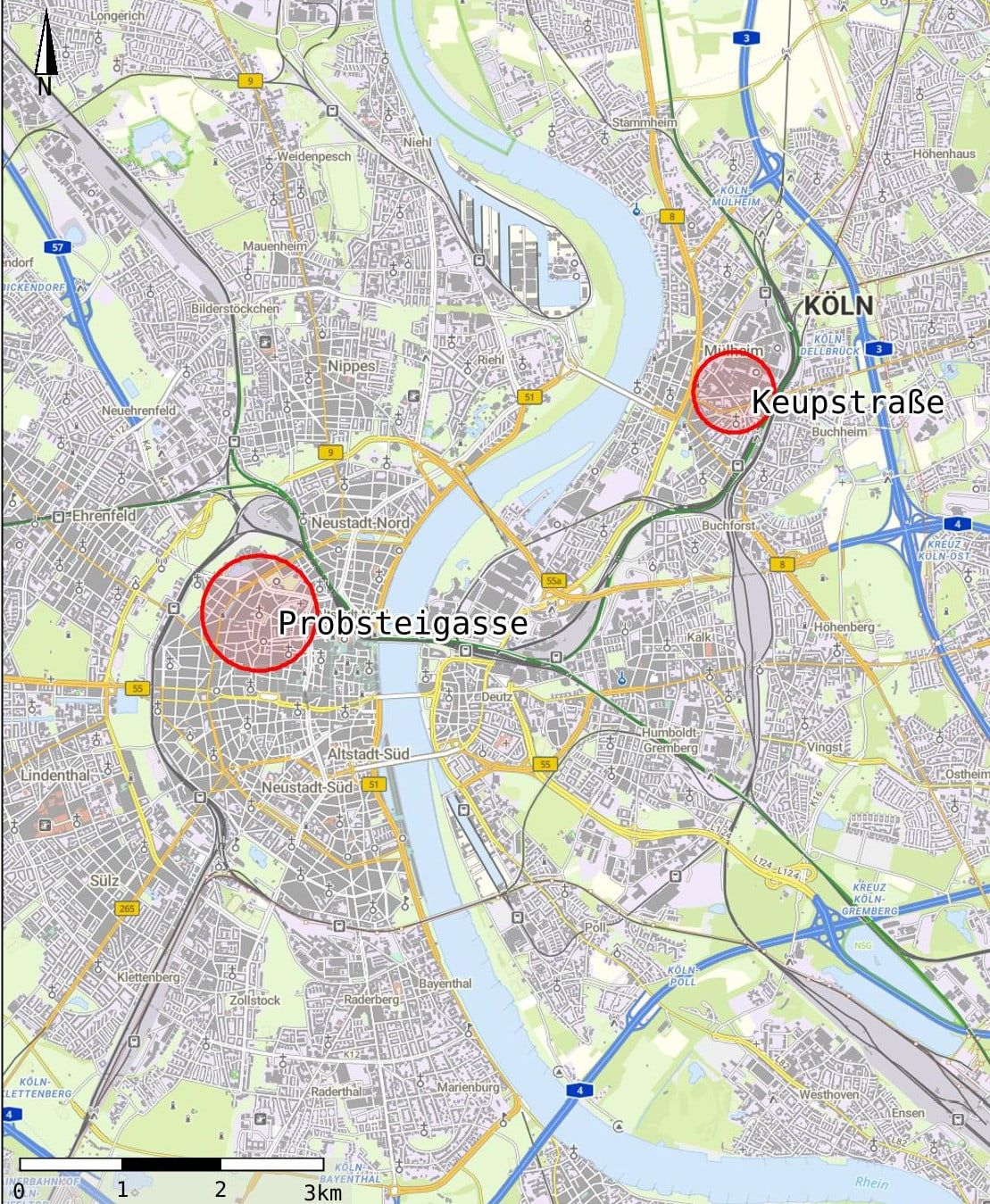
The Nationalsozialistischer Untergrund (NSU) murdered ten people between 2000 and 2007 and carried out three bombings, two of them in Cologne: on 19 January 2001 a bomb exploded in the Probsteigasse shop of a family of Iranian origin, and on 9 June 2004 a nail bomb on Keupstraße injured 22 people, four of them severely. For years the investigations were aimed at those affected themselves. Only when the NSU exposed itself in November 2011 were the attacks recognised for what they were: racist terror.
Çağan Varol has worked on the NSU complex since 2011: on the continuities of non-investigation and their consequences for society, on how police and media treated those affected, and on how the victims of right-wing violence enter social memory. From 2015 to 2017 he followed and documented the sessions of the NSU inquiry committee of the North Rhine-Westphalia state parliament. In 2023 he worked in Göttingen on the expert report for a nationwide NSU documentation centre, responsible among other things for bringing in the perspectives of those affected.
Remembrance is at the centre: the Birlikte events on Keupstraße, the Keupstraße memorial planned for years and still not built, and the planned documentation centre. In texts and talks he asks how entrepreneurial urban politics and festivalisation can depoliticise activist remembrance, and who is pushed to the margins in the process.
Places of remembrance
Three of the places where the victims of the NSU are remembered: in Cologne, Dortmund and Hamburg.
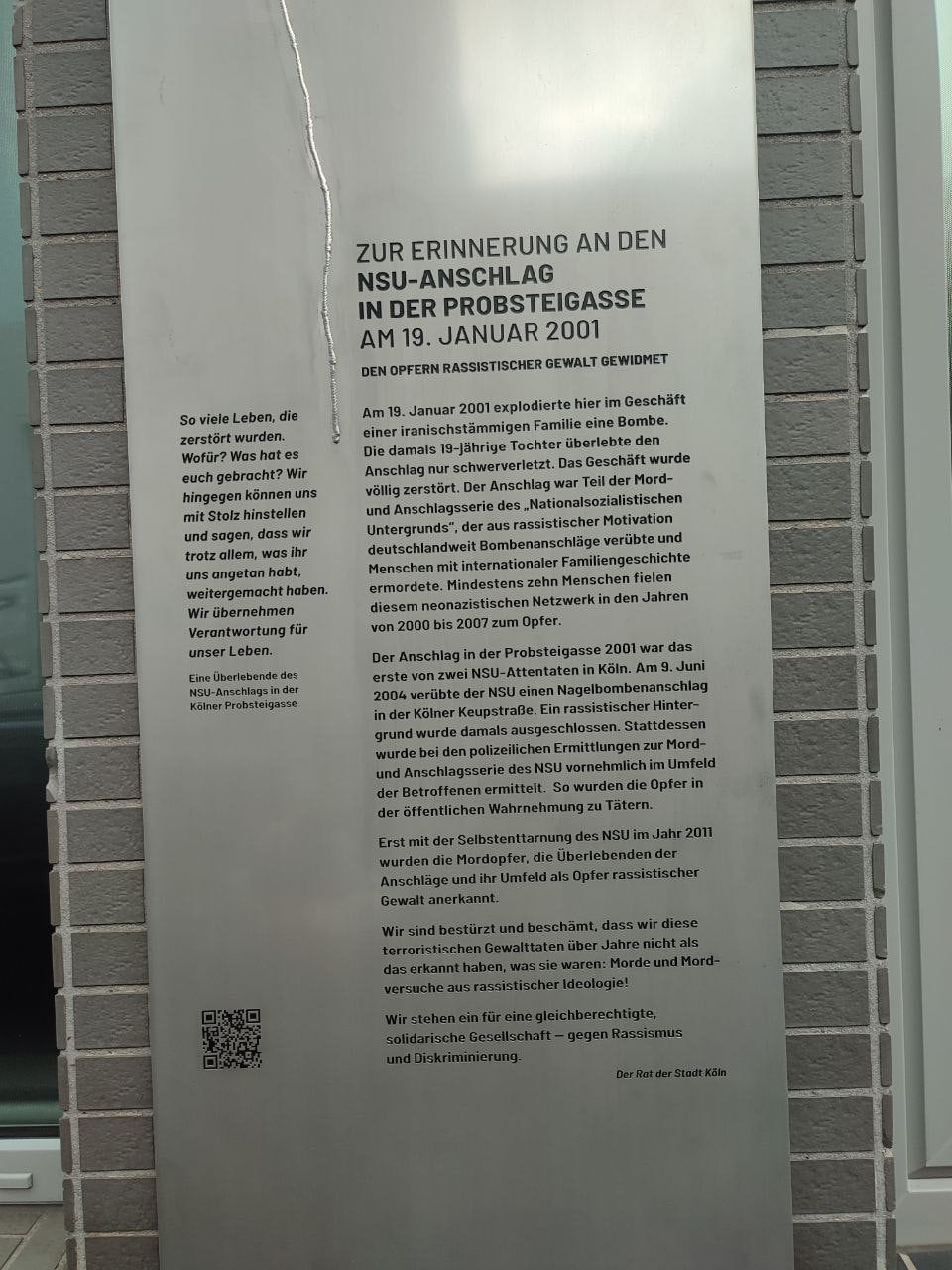
Cologne, Probsteigasse: the city’s memorial stele for the attack of 19 January 2001. Its text records that the police investigated “vornehmlich im Umfeld der Betroffenen” (mainly among those affected), turning the victims into suspects in public perception. 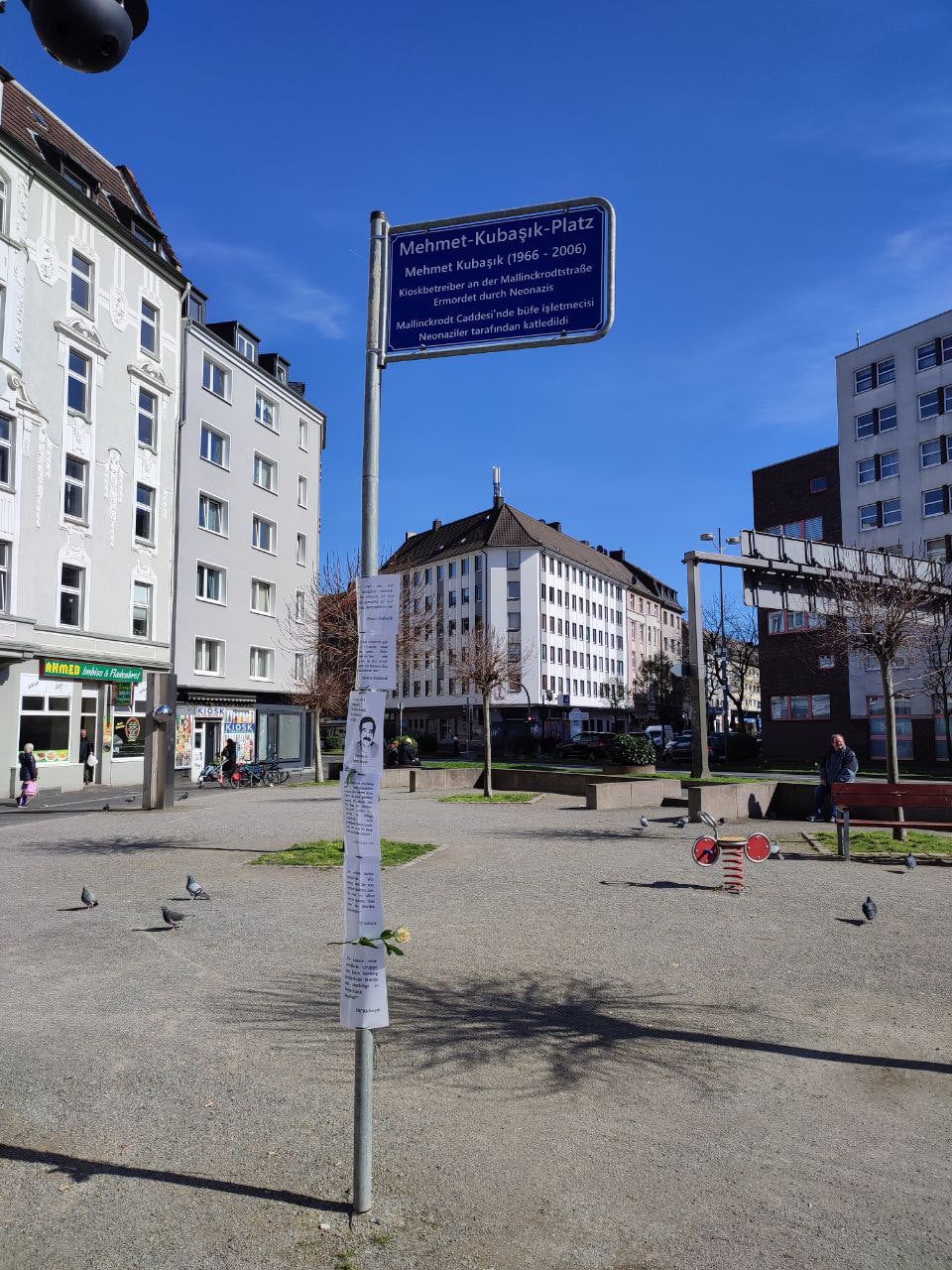
Dortmund, Mehmet-Kubaşık-Platz: the sign explains in German and Turkish who Mehmet Kubaşık was. 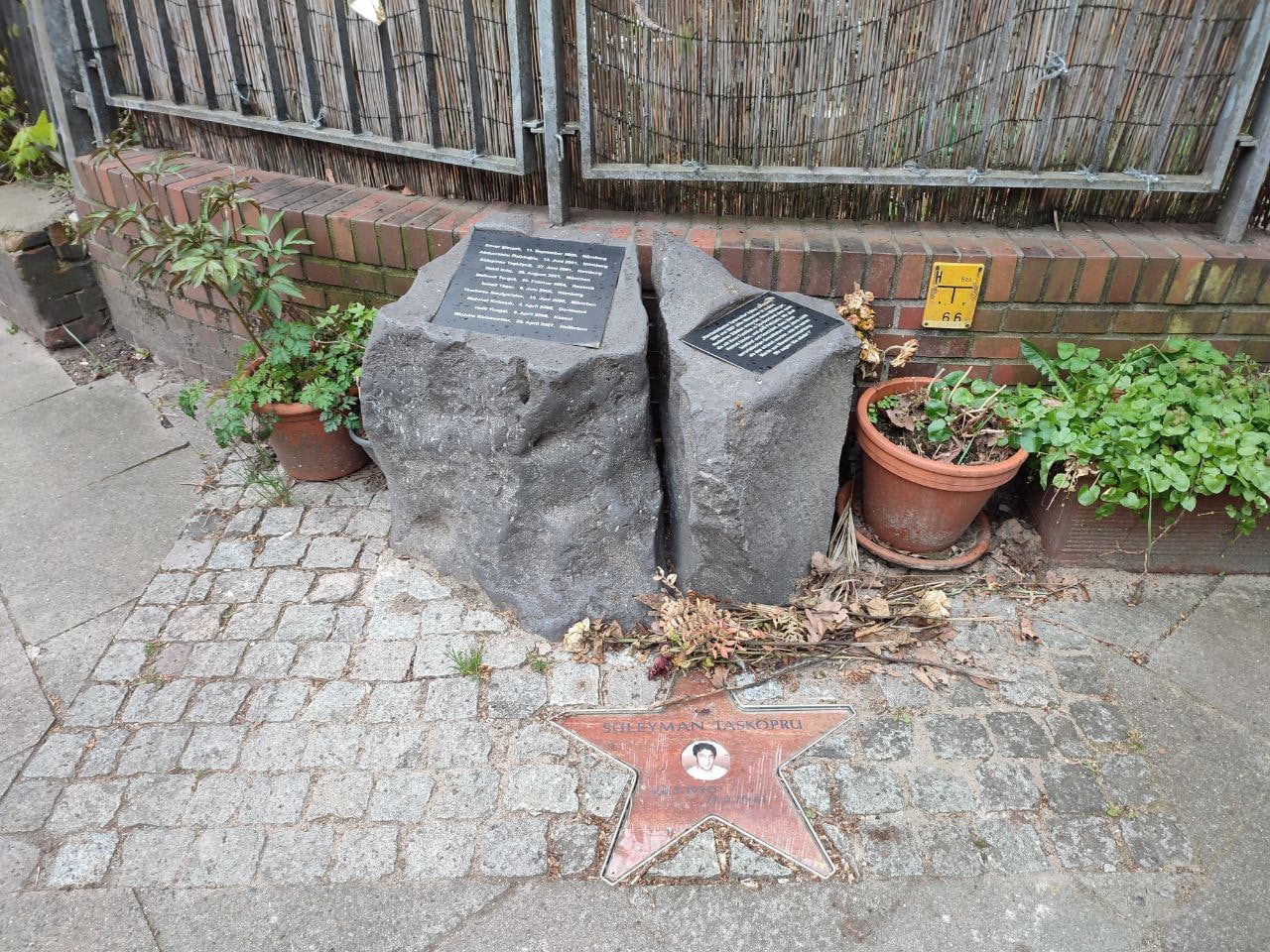
Hamburg-Bahrenfeld: memorial for Süleyman Taşköprü, murdered in his shop on 27 June 2001. The plaque names all ten people murdered by the NSU.
Memory work & observation
Observer of the NSU inquiry committee of the North Rhine-Westphalia state parliament
North Rhine-Westphalia state parliament, NSU inquiry committee
Followed and documented the committee’s sessions as an individual from 2015 to 2017, as he said in an interview in October 2021.
Publications
All publicationsRassifizierte Topographien. Über die Problematisierung von Migration im städtischen Raum
transcript Verlag, forthcoming.
„Diese Menschen waren ein Teil von uns“. Erinnern an Opfer rechter Gewalt, rassistische Migrationspolitik und symbolische Gewalt
In: Symbolische Ordnung und Rassismuskritik (Springer VS). With Gabriele Fischer and Ali Şirin.
Das Problem mit der Staatsräson. Kontinuitäten der Nicht-Aufklärung im NSU-Komplex und deren gesellschaftliche Folgen
In: Erinnern heißt Kämpfen. Kein Schlussstrich unter unsere Stimmen (Unrast).
»Ignoranz ist das andere Gesicht des Rassismus«. Gespräch mit Muhammet Ayazgün vom 14.12.2023
In: Erinnern heißt Kämpfen. Kein Schlussstrich unter unsere Stimmen (Unrast).
Dokumentationszentrum für die Opfer rassistischer Gewalt 1999–2007ff. Bundesweite Bestandsaufnahme von Aufarbeitungsaktivitäten und Einbindung von Betroffenenperspektiven (Teilbericht A, B, C)
Georg-August-Universität Göttingen. With Sabine Hess, Lee Hielscher, Yasmin Dreessen and Jelka Günther. With contributions by Andrea Horni.
Deutschland 2016: Kultureller Rassismus ist jetzt Mainstream. Zum mangelnden Interesse am NSU-Komplex
In: Die haben gedacht, wir waren das. MigrantInnen über rechten Terror und Rassismus (PapyRossa).
Writing
All writingDie Steinmeier-Show (external)
Critique of the 2024 Birlikte event marking 20 years since the NSU nail-bomb attack in Cologne; politicians staged solidarity while survivors were sidelined.
Keinen Dank, sondern Respekt! (external)
Review of Kutlu Yurtseven and Rossi Pennino’s history of the Cologne hip-hop group Microphone Mafia, including their anti-fascist work and response to the NSU attacks.
Zum mangelnden Interesse am NSU-Komplex: Deutschland 2016: Kultureller Rassismus ist jetzt Mainstream (external)
Reprint of his 2016 PapyRossa chapter on cultural racism and the lack of interest in the NSU complex.
Talks & media
All talks and media itemsUmkämpftes Erinnern in der postmigrantischen Gesellschaft (external)
Conference report by Alia Herz-Jakoby summarising his contribution on how entrepreneurial city marketing can depoliticise activist remembrance of the 2004 NSU nail-bomb attack on Keupstraße.
Erinnerung an die Opfer des Nagelbombenanschlags auf der Keupstraße – Zwischen unternehmerischen Stadtpolitiken und der Entpolitisierung von aktivistischen Praxen (external)
Paper in Panel 2, “Gedenken im öffentlichen Raum als Praxis der Problematisierung”, at the conference of the German Sociological Association (DGS) sections “Soziale Probleme und soziale Kontrolle” and “Migration und ethnische Minderheiten”.
„Man hat rein gar nichts gelernt“ (external)
Interview by Johanna Bröse in the issue “NSU – Zehn Jahre nach der Selbstenttarnung” on the Keupstraße nail bombing, the police and media treatment of the victims, the NSU tribunals, the Herkesin Meydanı initiative and institutional racism.
Solidarität muss Praxis werden (external)
Guest in an open-air discussion opening the campaign “Die Bürokratie des Bösen – Niemand muss Ausländerbehörde sein!”, on the NSU, neo-Nazis in police and domestic intelligence, Halle, Hanau and responses to racism.